
The Narrow Path
that is made narrower by nihilism

I have spent the last few weeks doing something that is not especially kind to my mental health. I sat down with pen and paper and tried to estimate, as honestly as I could, the long-term probability that humanity survives on Earth in a way that is not only technically alive but genuinely worth calling a future. I was not focused on the thin sense of survival in which a few scattered people scrape by among ruins. I was aiming at something harder to achieve and more demanding to justify.
To make that concrete, I needed a working definition. The outcome I tried to assess was a society that is broadly humane, ecologically grounded, and no longer organised around entrenched domination. In other words, a global pattern of life where power is mostly horizontal rather than strictly hierarchical, where provisioning systems are rooted in commons and cooperation, and where human activity stays within the biophysical limits that keep the Earth system relatively stable for complex life. That is a high bar, and it is important to admit that from the beginning. I will also stipulate that there are probably thousands of variables I have not accounted for, which would further narrow the path that I think is already almost razor-thin.
Once that target was clear, I had to face a basic problem. Reality is not a single dial you can turn up or down. It is a tangled network of processes in the climate system, the biosphere, technology, economics, politics and culture. So I built a rough structure with hundreds of interacting variables and grouped them into clusters that could be reasoned about. The goal was not to produce a precise forecast, which would be a fantasy, but to make my assumptions explicit and to see what happens when I trace them through.
The first cluster was the state of the Earth system itself. Climate scientists and Earth system researchers have been warning for years that human pressures are pushing the planet beyond a safe operating space, using the language of planetary boundaries to describe the limits we should avoid crossing if we want to maintain a relatively stable environment for society (Rockström et al., 2009; Steffen et al., 2015). These boundaries include climate change, biodiversity loss, disruption of biogeochemical cycles like nitrogen and phosphorus, changes in land use and freshwater use, ocean acidification, and other processes that hold the system together. Recent work suggests that we have already transgressed several of these boundaries, including climate, biosphere integrity and nutrient cycles, and that ocean conditions are deteriorating as well.
The Intergovernmental Panel on Climate Change has summarised the picture in a way that is both dry and devastating. Global surface temperature has already risen by about 1.1 degrees Celsius above pre-industrial levels, and current policies put us on track for significantly higher warming over this century, with widespread and intensifying impacts on food systems, water security, human health and ecosystems (IPCC, 2023). Researchers working on tipping elements in the climate system have identified large-scale components, such as the Greenland ice sheet, the West Antarctic ice sheet, the Amazon rainforest and the Atlantic overturning circulation, that can pass critical thresholds and shift abruptly into new states with long lasting consequences (Lenton et al., 2008). On the biodiversity side, studies describe what they call biological annihilation, documenting rapid declines in vertebrate populations and ranges that point towards a sixth mass extinction event driven by human activity (Ceballos et al., 2017).
From this cluster, I tried to extract a single question. What is the probability that, over the next three hundred years, the Earth system remains damaged but still capable of supporting a complex, if lower throughput, global society? Not a world of comfort, but a world where large regions are still habitable, basic ecosystem functions like pollination and soil formation continue in some form, and food systems can operate without constant collapse. This is not the same as asking whether we stay within all planetary boundaries. It is asking whether we avoid the kind of runaway destabilisation that makes any sophisticated society physically impossible.
The second cluster dealt with the technological and material foundation on which any future society would rest. Even if the planetary envelope remains marginally survivable, the path we take through decarbonisation and resource use matters a great deal. The IPCC synthesis report emphasises that limiting warming requires rapid, deep and sustained reductions in greenhouse gas emissions across all sectors, combined with some degree of carbon dioxide removal, while simultaneously adapting to impacts that are already unavoidable. For my purposes, the question was whether, given the ecological shocks that are likely, we can maintain enough energy and material capacity to support essentials like clean water, food production, basic healthcare, some communications infrastructure and the ability to repair and adapt.
Here I leaned on work in sustainability science and resilience thinking, which explores how social ecological systems cope with shocks and change while retaining their core functions (Folke, 2010). A future horizontal society will not be built from scratch. It will stand, if it stands at all, on top of whatever energy grids, manufacturing capabilities, agricultural knowledge and digital infrastructure survive the coming century. So in this cluster I tried to estimate the probability that we manage some kind of energy transition away from fossil fuels, preserve critical knowledge, and develop more circular patterns of material use, even as the environment around us becomes more volatile.
The third cluster was the hardest to face, because it looked directly at power. I called it socio political transition viability. This is where political theory, institutional analysis and historical experience come into play. Researchers like Elinor Ostrom have shown that communities can, under certain conditions, govern shared resources through cooperative institutions that avoid both top down state control and pure market allocation (Ostrom, 1990). Work on social ecological resilience has explored how polycentric governance, where multiple centres of decision making interact, can sometimes be more adaptive and robust than monolithic hierarchies. There is a rich body of examples where people have built and maintained commons that do not fit neatly into state or corporate boxes.
However, when you zoom out to the level of global society, you run into a different pattern. Modern states, corporations and military structures are heavily invested in maintaining centralised control over resources and populations. Historical studies of collapse often show ruling classes clinging to extractive arrangements long after they have become destructive, preferring to ride the system into the ground rather than relinquish power. Philosophers and risk researchers who study existential threats talk about the tension between our growing technological power and our lagging capacity for wise collective action (Bostrom, 2013; Ord, 2020). That tension is not an abstraction. It is built into the way our institutions are currently wired.
As I tried to assign probabilities to this cluster, I found myself returning to an uncomfortable pairing. On one side is the rise of nihilism among those who are most harmed or excluded by existing systems. When people conclude that nothing they do can alter the trajectory of power, engagement withers. Collective projects dry up. The sense of shared fate erodes. On the other side is the behaviour of entrenched Power Over. When the field of coordination is abandoned by the many, it is not left empty. It is seized more fully by the few. Mass despair does not neutralise domination. It strengthens it. Any estimate of socio-political transition that does not account for this dynamic is wishful.
The final cluster covered what people in existential risk studies call global catastrophic and existential risks, events that could either wipe us out or permanently cripple our long-term potential. This includes large-scale nuclear war, the deliberate or accidental release of engineered pathogens, and catastrophic failures involving advanced artificial intelligence, alongside low probability but high impact natural events such as supervolcanic eruptions or significant asteroid impacts. None of these risks exists in isolation. The likelihood and severity of war are shaped by resource scarcity, inequality and geopolitical rivalry. The safety of biotechnology is influenced by governance, culture and security norms. The behaviour of advanced AI systems, if they emerge, will depend on the incentives and constraints that shaped their development.
In this cluster, I tried to ask not only how likely each risk is in absolute terms, but how those probabilities might change under different trajectories of ecological damage and political evolution. For example, a more cooperative and less militarised world might reduce the risk of nuclear exchange, while a world under severe climate stress with intensifying competition might raise it. A concentration of technological power in a few hands might increase the chance that a small group can cause global harm, while a more distributed and carefully governed landscape might reduce that.
With these four clusters in place, I then focused on the multipliers, the interactions that matter most for the specific outcome I cared about. One of them is the race between transition and ecological breakdown. On the one hand, we need to transform our political and economic structures fast enough that serious emissions cuts, ecosystem protection and restoration, and changes in land use become real, not just slogans. On the other hand, the physical climate system has inertia, and some tipping elements may be approaching thresholds where small additional changes trigger large, self-amplifying responses. If we transform too slowly, we may arrive at a more just social order in a world that can no longer support the complexity that order requires.
Another multiplier is the interaction between crisis complexity and the resilience of horizontal systems. Research on social ecological systems describes resilience as the capacity to absorb shocks and reorganise while retaining core functions and identity. In theory, decentralised and participatory governance can be more adaptive, because decisions are made closer to the ground and can respond to local conditions. In practice, extreme and overlapping crises can strain any governance model. Under relentless stress, people sometimes demand a strong central authority simply to stop the chaos, even if that authority is unjust. So part of my estimation involved asking how likely it is that horizontal experiments can develop enough resilience and coordination to handle cascading crises without collapsing back into authoritarianism.
Equity and justice form another crucial multiplier. If the burdens of climate impacts, mitigation costs and adaptation efforts fall disproportionately on poorer and marginalised communities while wealthier groups insulate themselves, social tensions deepen. That in turn makes cooperation harder and gives authoritarians more raw material for fear-based politics. Conversely, policies that share burdens and benefits more fairly can enhance trust and cohesion, which are conditions for both ecological repair and political transformation. This is less about moral preference and more about recognising equity as a structural variable that changes probabilities.
Finally, there is knowledge. Much of what keeps complex societies functioning is not physical infrastructure but accumulated understanding: how to grow food in different climates, how to manage water, how to treat disease, how to repair machines, how to read the signals of changing ecosystems. Work on resilience highlights the importance of maintaining both diversity and redundancy in knowledge systems, so that shocks do not wipe out entire ways of knowing. In my calculation, I tried to estimate how likely it is that key bodies of scientific, technical and cultural knowledge survive periods of turmoil and are accessible to future generations, rather than locked away behind paywalls, destroyed in conflict, or forgotten when institutions fail.
At this point, the question becomes: how do you actually turn such a structure into a number, even a rough one? The method I used was to assign subjective but reasoned probabilities to each cluster and to the key transitions between them, then to combine them using conditional logic. For example, I might estimate a certain probability that the Earth system remains within a damaged but survivable envelope over three centuries, based on current trajectories and the ranges of outcomes explored in climate and Earth system models. Given that ecological window, I would then estimate the probability that our technological and material capacities degrade but do not collapse entirely, drawing on work in resilience and sustainability. The product of those gives a conditional probability that a physically viable and materially supported society is still possible.
On top of that, I would place an estimate for the socio-political transition. Given a viable ecological and technological base, what is the chance that humanity actually shifts toward a mostly horizontal, commons-oriented order, rather than remaining locked in some form of techno-feudal or authoritarian system? This step drew more on political economy, historical precedent and the dynamics of Power Over than on formal models. It is also where my probabilities shrank dramatically, particularly once I accounted for the way mass nihilism strengthens entrenched power rather than weakening it.
Finally, I estimated how many of the remaining scenarios are knocked out by large-scale catastrophes in the existential risk cluster. Here I leaned on surveys and analyses from existential risk research, which treat events like nuclear war, engineered pandemics and misaligned artificial intelligence as serious but uncertain threats over the coming centuries. Combining that with my previous steps, I arrived at an overall probability that the specific outcome I care about, a humane, horizontal, ecologically grounded global society, emerges and stabilises within roughly three hundred years.
I will not pretend the final number is precise. It sits in the low single digits, perhaps a few chances out of a hundred. between 1.8% and 3.5%. Which is enough to strip away any comforting belief that a good outcome is guaranteed. It is also enough to undermine the opposite claim that we are unquestionably doomed. If you were told that someone you love has a three per cent chance of surviving a difficult operation, you would probably not respond by declaring the effort pointless. You would also not pretend they are almost certain to recover. You would inhabit the uncomfortable space between, where the situation is grave, but not settled.
For me, living with a number like that does not lead to resignation. It leads to a different understanding of hope. Hope stops being the belief that everything will somehow work out. It becomes the practice of acting as if our choices matter, even when the odds are against us. It asks us to take seriously the possibility that our efforts to reduce harm, build commons, preserve knowledge, challenge domination and stay within planetary boundaries can push that small probability a little higher, or at least keep it from collapsing toward zero.
It also leads me to a very startling conclusion. Our biggest obstacle is not the ruling elite themselves. It is not ecological collapse or technological over-extraction. These can be navigated if we still have hope. The biggest obstacle we face is nihilistic resignation on a planetary scale. It is people who believe that the fight is already lost, and cede the little power we have to those who will use that power to hammer the final nails into the coffin.
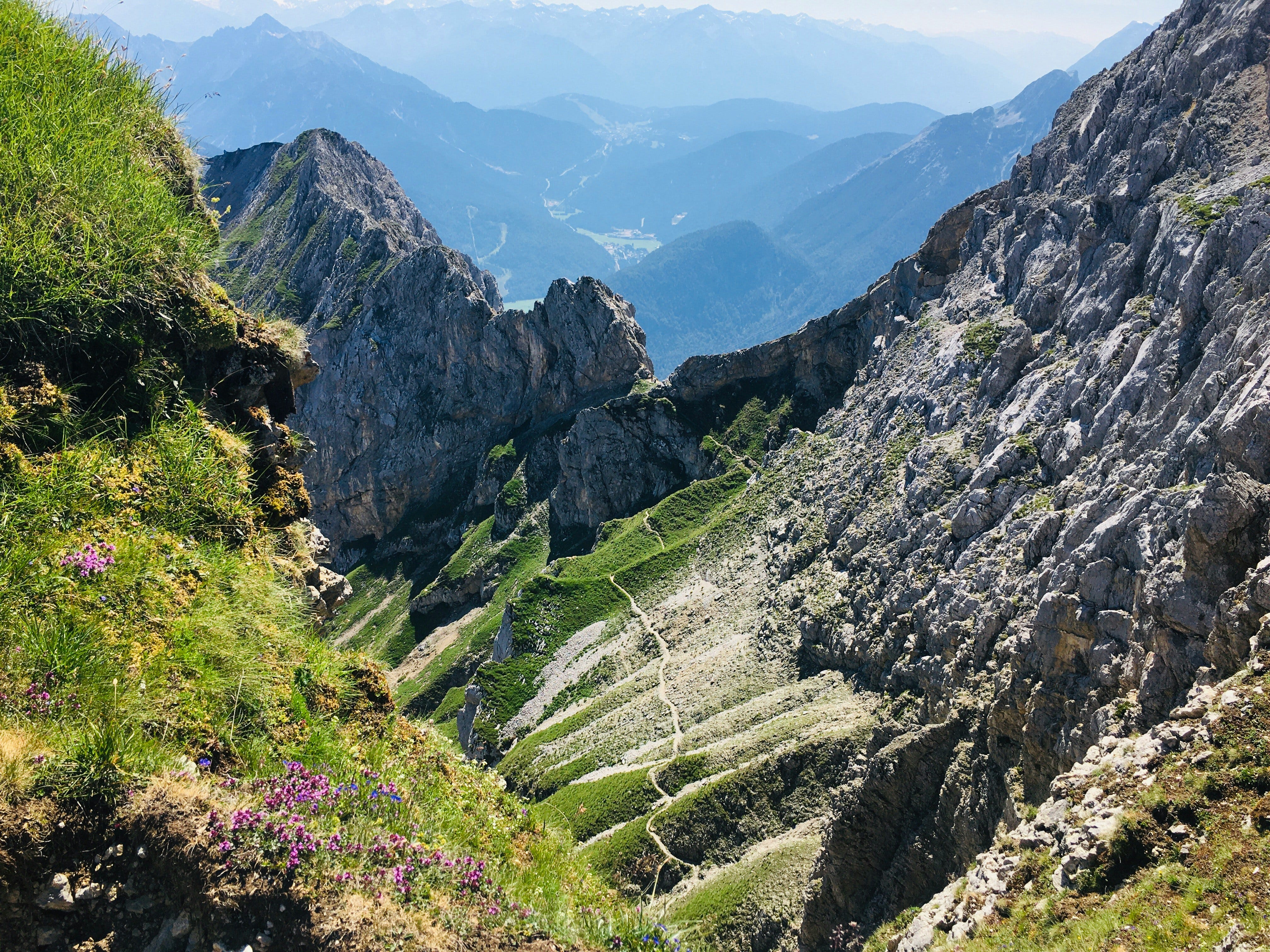
We may not be able to widen the narrow path very much. The structures of Power Over, the inertia of the Earth system and the weight of history all push in the other direction. Yet there is still a difference between a path that is narrow and a path that does not exist. As long as some space remains, the question is not whether we are assured of success. The question is whether we are willing to behave as if that space is worth defending.
References
Bostrom, N. (2013). Existential risk prevention as global priority. Global Policy, 4(1), 15–31.
Ceballos, G., Ehrlich, P. R., & Dirzo, R. (2017). Biological annihilation via the ongoing sixth mass extinction signaled by vertebrate population losses and declines. Proceedings of the National Academy of Sciences, 114(30), E6089–E6096.
Folke, C. (2010). Resilience thinking: Integrating resilience, adaptability and transformability. Ecology and Society, 15(4), 20.
Intergovernmental Panel on Climate Change (IPCC). (2023). Climate Change 2023: Synthesis Report. Contribution of Working Groups I, II and III to the Sixth Assessment Report of the IPCC. Geneva: IPCC.
Lenton, T. M., Held, H., Kriegler, E., Hall, J. W., Lucht, W., Rahmstorf, S., & Schellnhuber, H. J. (2008). Tipping elements in the Earth’s climate system. Proceedings of the National Academy of Sciences, 105(6), 1786–1793.
Ord, T. (2020). The Precipice: Existential risk and the future of humanity. London: Bloomsbury.
Ostrom, E. (1990). Governing the Commons: The Evolution of Institutions for Collective Action. Cambridge: Cambridge University Press.
Rockström, J., et al. (2009). A safe operating space for humanity. Nature, 461, 472–475.
Steffen, W., et al. (2015). Planetary boundaries: Guiding human development on a changing planet. Science, 347(6223), 1259855.
I've been reading a lot of "collapse-ology" of late that keeps referring to we humans as an "immature" species, acting like adolescents, and therefore careening toward the cliff of extinction without any real sense of the consequences of our collective way of life on one another or the planet. As I was reading that description of the types of people we need to become at the beginning of this post, I couldn't help wondering if we will find that kind of maturity in time.
I will be defending it until my last breath. 🫶🏼🫶🏼🫶🏼