
Metabolizing the Files
because we need metamorphosis, not retribution

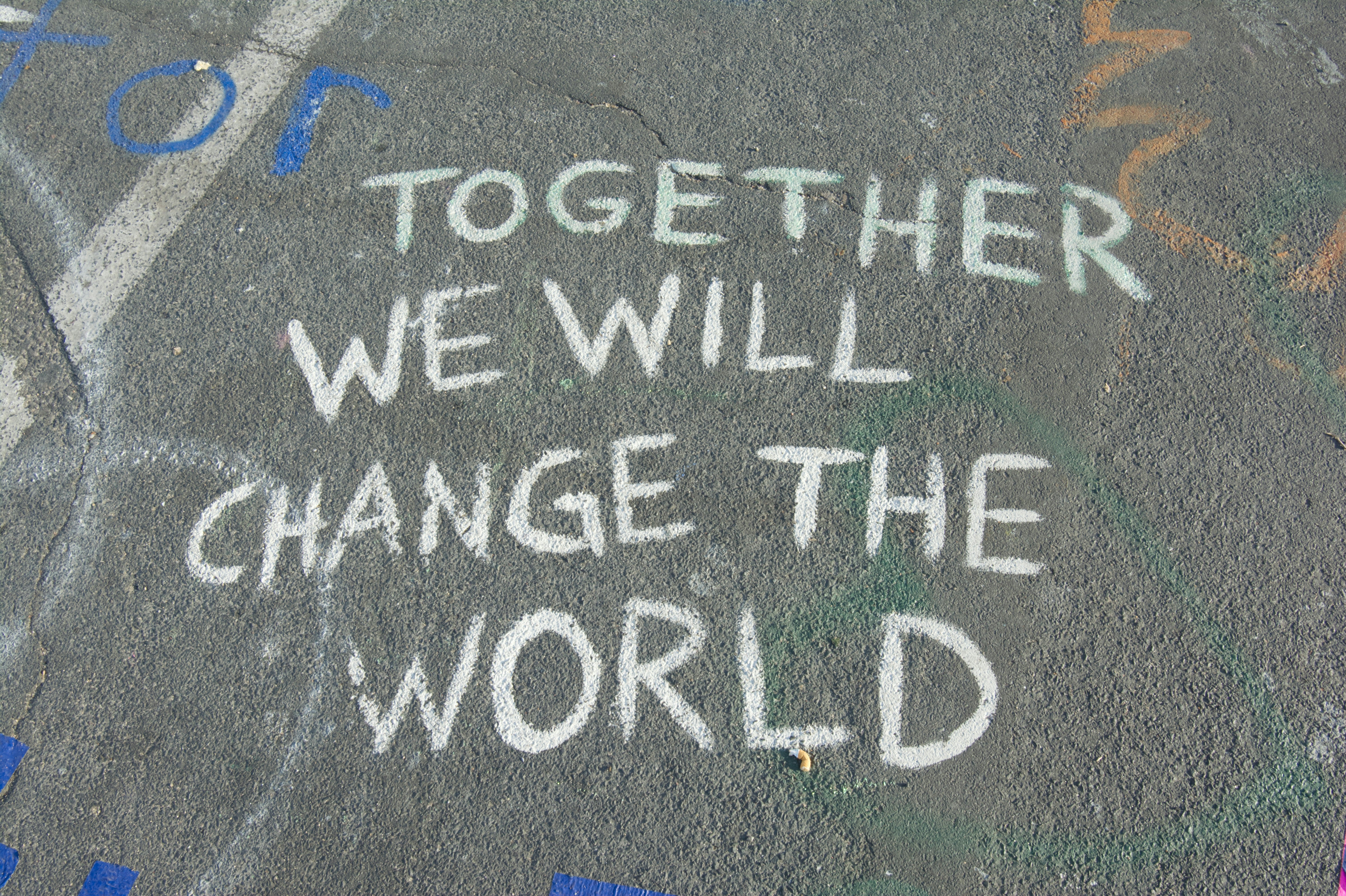
Yesterday I posted a note about the mainstream handling of the Epstein files. When someone suggested a people’s court in response to the note, I felt two things in relatively quick succession. The first was that familiar shrug, the reflex that said, “Yes, but it would be symbolic, a spectacle that cannot jail anyone or seize a single asset.” The second feeling was quieter and more interesting, because it gave me an opportunity to explore an idea I’ve spoken about on here several times but with very few entry points for demonstration of the idea (because it needs tangibility and is not a neat and tidy concept). If the official courts have spent decades protecting this entire ecosystem of harm, maybe symbolism is not the consolation prize I have been taught to see it as. Maybe it is one of the few tools we actually have left.

I have been circling this idea of metamorphic justice for a while. It came from a sense that the usual justice vocabulary feels like using the wrong set of tools on purpose. Retributive justice loves balance sheets and scales. Someone caused harm, the system inflicts harm back, the world is declared morally even again. Restorative justice, in its kinder forms, asks everyone to sit in a circle and speak from the heart, and aims to repair relationship and community. There are many that argue that both of those have their places. I would disagree, and am entirely open to discourse on the matter. But when we talk about Epstein, or anything on that scale, those frameworks start to feel strangely small. They lean on an assumption that the wider system is at least trying to be honest and fair. Here, the wider system is all over the crime scene, and not in the role it claims.
The United States government had detailed files on Epstein for years. The FBI investigated, wrote memos, drafted an indictment, and watched the case dissolve into that notorious non-prosecution agreement. Prosecutors and politicians shook hands around the edges of his world. Universities, banks, foundations, and media figures extended him legitimacy. Private jets, private islands, private everything. Then, when the whole thing finally burst past the point of containment, the same system tucked a mountain of evidence into sealed folders and called it complicated. This should not be a story about a monster slipping past the guards. It absolutely should be a story about the guards, and the systems that they claim are intended to guard us from the monsters.
If I take that seriously, then justice cannot just mean better guard work next time. It has to mean something more like a change in species. That is what metamorphosis is. The caterpillar does not get an apology and better leaves. Its entire body is taken apart and reassembled into something with different instincts, different ways of moving, different relationships to the world it occupies. Metamorphic justice is my attempt to point at that kind of shift, not only in individuals but in systems, institutions, cultures, habits of attention.
So I want to bring this back to the idea of a people’s court. Imagine a group of survivors, researchers, movement elders, legal minds, and ordinary people who refuse to be bystanders. They announce that, since the state has so clearly abdicated its own story about justice, they will hold a tribunal of conscience. They gather testimony, documents, timelines, financial records, sworn statements, expert analysis on grooming and trafficking and blackmail and power. They invite those implicated to speak, knowing most will not. They sit, listen, argue, and at the end they issue something that looks like a judgment.
On paper, nothing happens. No prison sentences follow. No bank accounts are frozen. The men whose names appear in the findings go on with their lives. It would be very easy to dismiss the entire thing as theatre.
But there is a difference between theatre that distracts, and theatre that reveals what has been hidden in plain sight. A people’s tribunal cannot compel a single witness, yet it can do something that official courts often avoid. It can tell the whole story. It can pull together fragments that appear in separate headlines and case files, and show them as a single pattern. It can name that pattern as a crime against more than one person at a time, and more than a list of particular victims. A crime against a generation, against bodies that were treated as disposable reproductive material for the fantasies of the wealthy, against whatever faint sense of safety existed for teenage girls in those circles. It can do that without needing to protect donors, alliances, foreign policy, or campaign optics (and I am sure many of you now can imagine this same strategy being used to lay bare all sorts of injustice).
This is where metamorphic justice starts to breathe a little. The point is not to pretend that an unofficial tribunal is secretly a real court. The point is to notice what happens when we stop waiting for permission to name what we already know. The state has a monopoly on legitimate violence. It does not have a monopoly on truth. It does not have a monopoly on moral language, or on memory.
Of course, naming is not enough. If all we do is write fierce judgments and let them float around social media, nothing fundamental has changed. Then we are doing little more than what is already being done by the existing Liberal virtue-signalling mainstream. Metamorphosis is not a new slogan pasted onto the same body. It is tissue work that is meant to be deep, slow, awkward, and contested.
Take the financial architecture that made Epstein’s life so easy. Private equity, offshore trusts, secretive banks that pride themselves on discretion. Philanthropic fronts that buy social respectability with a fraction of the money extracted elsewhere. For metamorphic justice, the question is not how to ensure the next Epstein files are released a bit sooner. The question is what needs to stop existing, or be radically reconfigured, so that a man with those desires and that money cannot spend decades moving through the world as a kind of invisible node of predation. When such institutions are named in a public tribunal, we have named that which needs to be metabolized.
That could point toward bans on specific secrecy vehicles, serious penalties for institutions that engage in willful blindness around trafficking, or entirely different ways of structuring wealth and property. It gets uncomfortable fast, because real metamorphosis always does. It draws a line between tinkering and transformation and asks which side we are actually on.
There is also the culture around masculinity and entitlement layered across this case. The ease with which powerful men can treat young women as status symbols, entertainment, and offerings to each other. The way “everyone kind of knew” becomes a shrug instead of a siren. Metamorphic justice wants to know how that shrug is produced, and how to interrupt it. Not just with campaigns and posters, but with changes to how boys are raised, what counts as a joke in certain rooms, how desire and consent get narrated in media, what counts as bystander courage in elite spaces.
Now, this all sounds large and abstract, and it is. But it also loops back into very simple, grounded gestures. A people’s tribunal is a way of saying: we no longer accept the “official” version of events as the only version that matters. Survivor led networks are a way of saying: we will not wait for courts to declare that harm happened before we believe each other, and we will not let institutions define what “closure” means if closure only serves their reputation. Community based accountability processes are a way of saying: prison is not the only imaginable response to harm, and sometimes it is not even an honest one, but doing nothing is not acceptable either.
Metamorphic justice would try to hold all of that without pretending it will snap into place as a coherent system any time soon. The starting goal is to notices that there is a hunger for clear endings. A conviction, a sentence, a feeling that the account has been settled. It does not shame that hunger. It does, however, refuse to let that hunger be the only measure of whether justice has happened. Sometimes the most important work is quieter. Changing policies at a bank. Defunding a particular surveillance unit. Creating a norm in a profession that says: if you are in the room when someone jokes about “young flesh,” you do not smile and walk away, you act.
What makes this difficult is that metamorphic justice will rarely give you a moment where you can say, “There, it is done.” It is more like tending to an ecosystem that has been poisoned in ways that are still not fully visible. You pull out one contaminant and discover another buried underneath. You plant something small, it fails, you try again with different soil, different companions. Meanwhile the old growth keeps trying to come back.
With Epstein, the temptation is to fantasize about the one decisive act that would finally count. The big trial. The spectacular leak. The complete release of every file with every name. The fantasy is understandable, especially when you watch the state perform sincerity while doing almost everything possible to limit exposure. But the longer I sit with it, the more I think that even the fantasy needs to be reframed. If a miracle occurred and every person who knew, enabled, or profited was dragged into court tomorrow, what then. Without deeper changes to finance, politics, media, gender norms, and the dynamics of Power Over, the ground is still ready for the next iteration.
This sounds like an argument for despair. I do not mean it that way. I think it is an argument for being more honest about scale and about direction. A people’s court, in this light, is not a rehearsal for the state. It is practice in taking ourselves seriously as moral agents who can generate our own records and judgments. Survivor-centered processes are not a footnote to formal prosecutions. They are experiments in building forms of accountability that do not depend on institutions that have already declared, again and again, that some lives are negotiable. Structural campaigns that target banks, universities, foundations, and media houses are not distractions from “real” justice. They are some of the only levers we have to reshape the habitat in which this kind of violence thrives.
I wish I could say that metamorphic justice is a coherent program we can implement if we just decide to. It is not. It is more like a direction of travel, a way to orient ourselves in the wreckage. It is a refusal to let justice be reduced to either punishment fantasies or tidy reconciliation ceremonies. It asks harder questions. What would have to change so thoroughly that a case like this would be impossible, not just embarrassing. What do we owe, not only to those who survived, but to those who will be at risk tomorrow if we settle for a smaller transformation because it feels easier to describe.
There is no neat way to end this that does not betray the concept. So I will leave it here, in the discomfort. Somewhere between the desire to see particular men actually face consequences, and the recognition that even that would be only a fragment of what justice could mean, if we let it become something metamorphic.
I think the trick would be to constitute this people's court in a way that attracted public trust. It would probably need a running in period working on less high profile cases which would give it some legitimacy that would be needed for these bigger fish. This certainly has legs!
We can head in that direction now with the choices we make.
Bank at a credit union instead of a bank, since banks invest in all kinds of things that are reprehensible while credit unions invest in their communities.
Refuse to be complicit in some of the everyday violence around us.
Buy local, fair trade, organic, since this aims our money into a better direction than the alternatives.
Put relationships before opinions, and build community.
These are just off the top of my head, but they're tangible steps we can take.