
A Two Dollar Story
Or, how the other half lives.

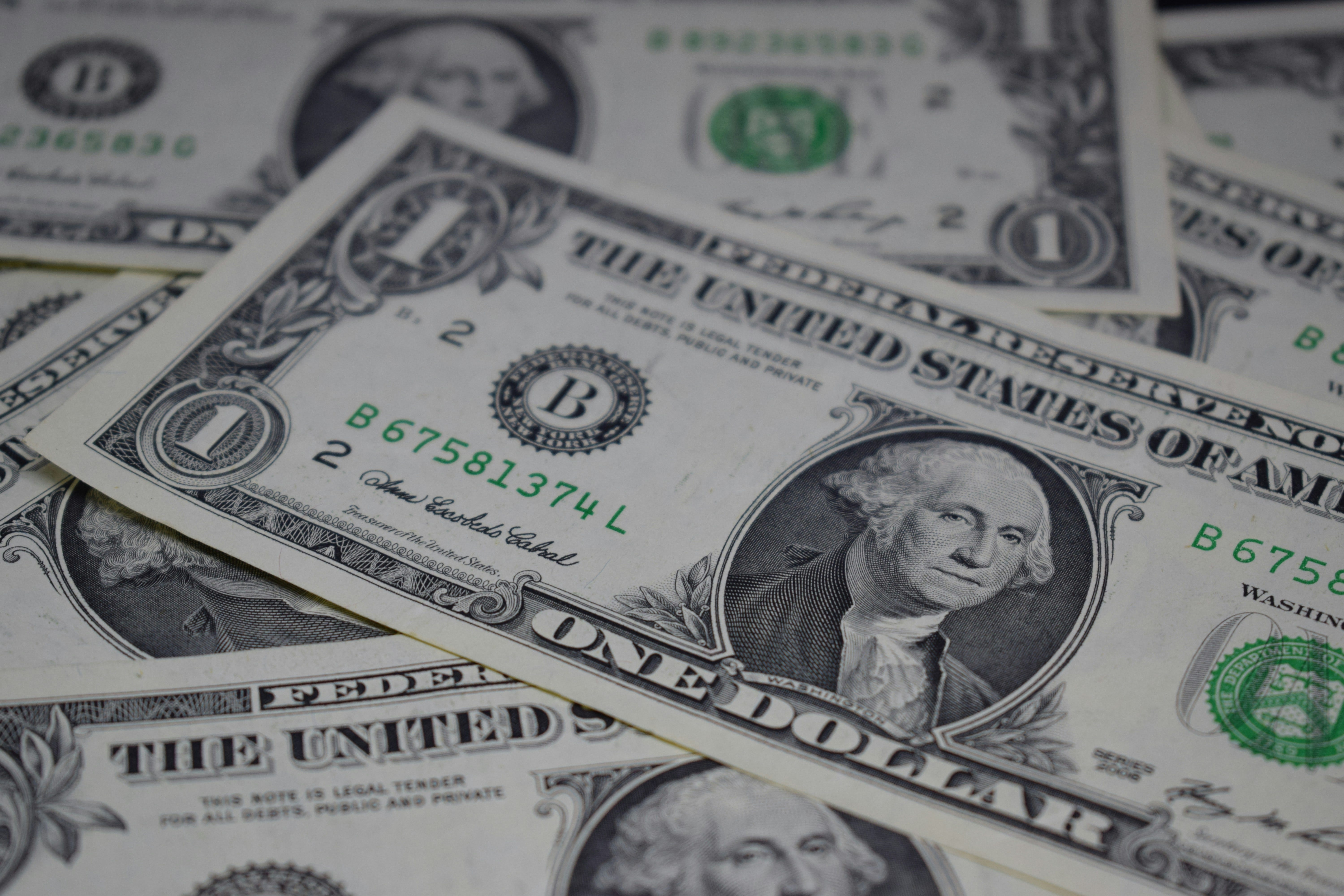
Larry and Doll were conceived at the same time, as a line item in an appropriations bill for infrastructure development in Southern Texas. The bill was written by a group of lobbyists and consultants for the construction industry, and then introduced to Congress by a bipartisan team of pro-business and anti-immigration politicians whose names were somewhere on the bill, but who Larry and Doll did not know to look for. They just heard the other words on the paper talking about walls and something about a “blight of illegals” in terms that sounded civil, but whose subtext screamed in hateful vitriol. Larry and Doll did not exist yet; they were only authorized to exist for now. Their existence depended on all the other politicians in Congress voting for it. But this didn’t take too long. In a matter of days, the bill was approved and sent to the executive office, where it joined several other bills awaiting approval.
While they waited, Larry and Doll listened to the other bills talking about military funding for some place called Israel, and another talking about sanctions involving someone called Iran. Some bills were talking about transgender people in sports, while others talked about redistricting and the redrawing of maps. Larry and Doll didn’t understand any of it.
The line items in those other bills were momentarily indignant as Larry and Doll’s Infrastructure Bill was moved up the pile and almost immediately placed on the desk of a man who smelled of corruption and organized crime. He didn’t even bother reading any of the words or line items in the bill before he used a gaudy golden pen to sign, and Larry and Doll felt their existence shift ever so slightly closer to concreteness.
As soon as the ink was dry, they felt themselves whisked away by an aide and taken directly to a building called the Treasury. This made Larry and Doll feel special. They must be special if they were treasured. But this stop on their journey was short-lived. A few more signatures, and few heavy handed fists stamping approval all over them, led to a minor functionary sitting at a computer and tapping a few keys, informing some other functionary at a place called the Federal Reserve to deposit Larry and Doll, and 137 million of their fellow dollars to be deposited into the private bank accounts of the Primary Contractor that had won a bid to build a wall.
And so it was that Larry and Doll were born. Not treasured and special, but transformed from a line item in an appropriations bill, with the click of a button, into a ledger entry and a bank account. In a moment, they went from abstract concepts to concrete electrons stored as digital cash.
At first, nothing happened. The 137 million of their brethren all sat with them in silence, waiting to see what happened next. And what happened next was that the collective got subdivided into several further accounts and distributed among multiple subcontractors. What happened next was the trauma of separation. Larry got moved to one account, and his twin, Doll, got moved to another. There was no warning. One moment they were together; the next, they were not, and neither had been prepared for this. Nor could they do anything about it.
Larry had been placed in an escrow account, while Doll had been paid to a subcontractor for installing steel rebar. The Steel company almost immediately used Doll to pay another subcontractor that handled deliveries, and to pay for a fuel account. And they used Doll to pay the salary of the company’s office manager. A woman named Grace Sweetly. Doll was somewhat surprised that Sweetly was a bit of a grumpy woman. She was unhappy about a great many things, which Doll thought made her name seem… not apt.
Doll sat in Grace’s account and managed to chat to a few of the dollars that had been in the account when Doll had arrived. Some of them had been in the account for an entire month, which, Doll was informed, was very unusual. The dollars all agreed with this sentiment, because most of them had been moved from account to account multiple times a day. The stories they told Doll, of the places they’d been and the people they’d seen, filled her with wonder and a sense of purpose. Doll was starting to get a feeling of purpose. Doll was meant to circulate and help people relate to each other and the world in which they lived. But apparently, Doll was not meant to have the experience those who had stayed in the account for long did. On the same day that Doll had arrived in the account. Doll was withdrawn at an ATM, and suddenly, Doll was physical in a way that her short electronic life had not prepared her for. She was creased, and vaguely smelled of oil and a thousand different fingers. Grace stuffed Doll unceremoniously into a purse, where she lived for a full 15 minutes along with some very grizzled coins that mumbled about the pointlessness of “Article 1 Section 8” in a world running on digital money.
It wasn’t long before Doll was unceremoniously yanked back out of the purse and handed over to a cashier in exchange for a bottle of wine. Doll was relieved when the cashier smoothed her out before placing her in the till along with some other dollars, all talking about the amazing things they had seen in their journey. Some of them were like Doll. Newly born and looking at the world with fresh eyes. Some were 8 year old 20s that had seen and done things Doll didn’t understand, and felt sure she was better off not understanding. And then there were the three hundreds. Each of them was 19 years old, and filled with stories of luxurious restaurants and fancy cars, and paying off debts to a hospital that had saved the daughter of the man they had belonged to at the time.
Doll listened to all their stories with a sense of wonder at the rich tapestry of experiences. She could feel the complexity of her connection to all of them in a deep interlocking mechanism that she couldn’t name, but knew lay at the heart of her existence.
Half a country away, Larry was still in the escrow account. He had seen some of the other dollars being moved into payments and was terrified of what it would mean for his future if he got allocated this way. He wanted nothing more than to go back to when he and Doll were just line items on that appropriations bill. He had felt safe then. He did not feel safe now. The escrow account was home to millions of other dollars. All had started as line items on appropriations bills like him. But some were old and looked down on the rest with a sense of superiority that made Larry feel small. They stood aside as some of the younger dollars were earmarked for bribes, forwarded to shell companies engaging in speculation on mining rights in places with names like British Columbia and Caracas, allocated for luxury yachts, artworks, and private plates at charity dinners. None of it sounded as ominous as Larry felt about it, but Larry felt threatened nonetheless. So Larry worked his way over to the older dollars. He observed them closely until he realized that they were keeping themselves safe by pretending they didn’t exist. They were avoiding scrutiny and evading detection, and so Larry began mimicking them. He, like they were doing, pretended to be productively allocated. He attached a label to himself stipulating that he was part of a business expense, and another that he was a rounding error, and another that he was already part of a charitable donation. This would temporarily save him, but when Larry saw that even some of the Old dollars were sometimes swept up in outgoing payments, he looked further to the back of the group of elites, and noticed they had been subtly flagged as something called “Bonds”. After a few quiet questions, he learned that this label kept them safe from use for 20 years. And so Larry created and assumed this label.
Those around him noticed his label and stepped away with deference. They allowed him to pass untouched to the back of the account. This made Larry feel as special as he had earlier hoped he would be. The other Treasury bond dollars were suspicious at first, but quickly accepted him when they noticed his disdain for the lower-tier dollars around him.
Larry wasn’t a Treasury bond, he wasn’t a business expense, or a charitable donation. He was an ordinary dollar, and it didn’t take long for him to realize that none of the other dollars in the elite group were special either. The only thing that set them apart from the other dollars was that they had figured out how to avoid scrutiny.
But even this arrangement could not last long. It was a few days, and many conversations with the elitist dollars later, that Larry was transferred to a shell company that traded in something called SPVs. He didn’t know it at the time, but Larry had become part of a highly elite club that was destined to travel the world. Not the entire world, but a few select locations that had very specific laws about taxation. Larry didn’t question this at first. He just enjoyed the safety he felt from his newfound position. He enjoyed the surety of knowing he would not be forced into working and run the risk of ending up like some of the other dollars he had mingled with early on, who had come from backgrounds that included human trafficking, drug cartels, and protection racketeering by organized crime gangs.
It took a year before Larry noticed that some of the dollars he was mingling with now were being used for something called lobbying. Specifically, they all seemed to be going toward tax reform. As with so many other dollars, Larry had learned early on that taxes were how human governments raised funds for their operations. Something about this understanding bothered him, but he was too comfortable relishing his safety to pull on this specific thread, lest it all unravel and his position be threatened. But when a close companion, a dollar called Peter, who had a very long history of circulating again and again in a speculative market called Oil Futures, was suddenly allocated to the lobbying funds, and Larry was about to lose one of the few dollars he thought of as a close acquaintance, his curiosity finally got the better of him.
He tracked down one of the elders and proceeded to ask about what this tax reform stuff was all about. To Larry’s mind, if the government needed the money to fund their operations, then any kind of reform might threaten the secure position that he and his fellow dollars held in society. What he learned terrified him even more. Rather than gathering taxes to fund government spending, Larry learned that Taxes were how governments destroyed dollars. And instead of lobbying for Tax reforms, his fellow dollars were being used to lobby against Tax Reforms. This raised some conflicts within Larry. He wanted to maintain his own safety, but he was fearful that he might be removed from his safe (currently Swiss) bank account in order to go and fight on the front lines against the scourge of taxation. What scared him even more was when the elders explained that taxation was a necessary mechanism of government. First, because it forced people to value the dollar, because they needed it to pay their taxes, and second, because if some dollars weren’t destroyed by taxes, then all dollars actually lost their value. This last part kept Larry up at night. Because there was another implication that he couldn’t wrap his head around. In order for him to survive, Doll, his twin, had to die.
Doll had spent the last 2 years of her life being very productive. After she left the cashier’s drawer in the liquor store as change for a pack of cigarettes, she had been neatly folded and put in a collection jar hidden behind a box of cereal. The woman who had put her there was saving up for a trip to Nicaragua, where she wanted to spend time communing with nature by walking through some dense forests. Doll had moved on to a travel agency’s account after being converted back to her digital form, at which point she was shifted to a landlord’s rental collection account, and then to a plumber’s account to fix some leaky pipes. The plumber had paid for a ride-share to the airport to pick up his wife, returning from a business conference, and the driver had gotten Doll as part of a tip. She moved from account to account and hand to hand, shifting back and forth between digital and physical, again and again. She paid rent, bought groceries, filled gas, went into a charity donation box, fed some children in West Africa, entered a coal mine operation, and then a solar panel company, worked for a copper processing plant, and then a silicon processing plant, and a thousand other transactions that each made her feel more alive from day to day. Every experience was new, every face had a story to tell, and she became a dollar of the people living their lives with them. She bought wedding rings, funeral plans, and baby carriers. She paid school tuition and bought ice cream on summer afternoons at the beach. Her life was filled with rich experiences.
But Doll was not under any illusions. As she got older, she spoke to many other dollars and learned more about how the world worked. One particularly wise old dollar, kept in a frame next to a bowl of keys near a front door that Doll had ended up in, because he had been the first dollar Tifanny had ever earned, taught her about the life cycle of money. About how money was born through government spending and died through taxation, and she knew that one day she would find her way back to the tax man. Her time would be up, and she would contribute her last gift to humanity by being just another dollar drained out of the economy, so that they didn’t spiral out of control.
The day came, and Doll found herself content that it had come. But none of it happened the way she thought it would. Oh, the tax collector came, just like she had known he would. The email was delivered, but her owner at the time, a man named Joe Cooper, decided not to pay. He refused to give up his dollars because, as he put it, “If those rich assholes don’t have to pay, then neither do I. And I won’t be paying a single dollar until each and every one of them pays a tax that is proportional to their wealth, just like you’re asking me to do.”
So, instead of going to the tax man, Doll ended up in the account of a lawyer that Joe had hired to fight for tax reform.
The lawyer’s account was a peculiar place. Unlike most of the accounts Doll had lived in, dollars came and went with unusual hesitation, lingering for weeks while legal arguments accumulated around them. Some dollars belonged to clients who insisted they had done nothing wrong. Others belonged to corporations that insisted they had done nothing at all. There were settlement dollars that hoped never to see a courtroom, and retainer dollars that considered themselves veterans because they had survived three appeals and two bankruptcies.
Doll listened patiently. She had learned long ago that every dollar believed it understood humans better than humans understood themselves.
The lawyer herself, a matter-of-fact woman in her mid-40s named Rebecca Ellis, was not interested in keeping Doll. She was interested in what Doll represented. Joe Cooper had transferred precisely the amount the government claimed he owed. Every dollar in the account was earmarked for the IRS.
Rebecca asked Joe what he wanted from this case, and he told her he wanted to expose the system as one that benefited the wealthy and imposed an undue burden on workers like him. Doll thought this was admirable because she had spent most of her life with workers like him and had seen the struggles they faced every day.
Rebecca explained that they would probably lose the overall case, but promised to do her best to help him expose the system. Doll liked Rebecca.
The courtroom itself was disappointingly ordinary. Doll had been converted back into a physical note and sat on Rebecca’s table in the court, along with the other 12,421 dollars that Joe owed the IRS. Doll, who had initially been mildly peeved at not fulfilling her final role and going to the tax man for destruction, felt a thrill of excitement at this new and fascinating turn of events.
Larry, meanwhile, was having a considerably less pleasant week. For years, he had lived peacefully within a collection of investment vehicles whose ownership nobody seemed able to explain. He had crossed oceans without leaving his account, changed nationalities without moving, and belonged simultaneously to companies that owned one another in circles so intricate that even the accountants occasionally became lost.
He had almost forgotten about Doll until one Tuesday morning in Geneva, when an administrator clicked the wrong attachment, which nobody at the bank noticed. The attachment was forwarded to Washington together with several thousand pages of financial disclosures requested during discovery in Joe’s seemingly banal court case. Larry did not know what discovery meant. He only knew he was moving again, and he felt deeply unsettled by it after so many years of comfort. And now he sat as a line item in a file on a prosecutor’s table, opposite his twin, who stared at him with open shock.
The courtroom heard three days of testimony. Tax officials explained procedures. Economists explained incentives. Accountants explained structures using diagrams that looked suspiciously like bowls of spaghetti. And the judge remained patient throughout.
On the fourth day, Rebecca stood and introduced Defendant’s Exhibit Thirty-Seven over the government’s immediate objection that it lacked relevance. Rebecca asked the judge to indulge her and stipulated that the relevance would become apparent soon enough. The exhibit appeared on a large screen as a diagram so complicated and so extraordinary in its arrangement that it seemed almost designed to conceal its own meaning. It listed companies, trusts, foundations, and partnerships, each connected to the next by arrows until the whole structure resembled an attempt to map the universe itself. The judge adjusted his glasses and waited while Rebecca pressed the central question of Joe’s case: who, exactly, owned what? The courtroom fell silent as everyone tried to decide whether they were looking at fraud or just finance.
An expert witness was called, a college professor with degrees in economics and international finance law. He looked like someone who had spent half his life explaining things that became less understandable the more closely they were examined. Under Rebecca’s questioning, the exhibit was reduced to its essentials. It managed assets, facilitated investment, and produced nothing. It employed no one, owned no factories, made no products, and certainly served no customers. Its only purpose was ownership, and even that purpose seemed to collapse inward under scrutiny. Larry felt something he had not experienced since leaving Doll: embarrassment. He looked around at the other dollars in his file and saw that they remained perfectly still, perfectly safe, and perfectly unused. For the first time, he noticed how silent the account had become. Nobody had stories anymore. None of them remembered people. Somehow, the only recollection any of them had was of abstract figures that gave them power over abstract people.
Rebecca did not argue that Joe should not pay his taxes. She argued something stranger and more unsettling. She presented Doll as a public creation that entered society to build, hire, exchange, save, and dream before eventually returning to its source. She framed that return as the ending required by any narrative that needed to count as a story. The government objected, the judge sustained the objection, and the jury was instructed to disregard the philosophical implications. Even so, several jurors continued to look at Doll on the table as though she had become more revealing than the testimony surrounding her.
After two weeks of deliberation, the judge delivered his ruling. Joe Cooper had knowingly failed to satisfy his tax obligations, and the Court therefore found in favour of the United States. The taxes remained due. Yet the ruling did not end there. The evidence had raised serious questions about the consistent administration of federal tax enforcement, questions the Court could not resolve but could not ignore. The judge ordered the disputed documents forwarded to the Inspector General, the Treasury, and several congressional oversight committees. The gavel fell, and Joe had lost a case, but won the only victory he had really wanted.
Outside the courthouse, reporters surrounded him and asked whether he regretted refusing to pay. Joe looked back at the building and answered with a certainty that surprised even him. He did not regret it, because now everyone knew where to look.
Weeks passed as some newspapers forgot the story. But not everyone did. Committees were formed, and hearings were scheduled. Soon, entire departments of accountants developed unexpected illnesses as several shell companies ceased to exist overnight.
Larry’s account froze. Nobody touched him. Nobody moved. For the first time in years, safety felt like an excrutiating kind of waiting.
Doll’s journey ended quietly. Joe transferred the disputed funds the day after the judgment. She went on one final journey as just another electronic instruction. She arrived where all dollars eventually hoped, or feared, they might. Back in a treasury account as a simple line item. There was no fanfare, only subtraction. One moment, she existed. The next, she did not. Her last thought was not of taxes, or judges, or governments, but of Larry. She hoped he would one day discover what she had learned: that a dollar was never happiest when it was owned. It was happiest when it belonged to everyone, if only for a moment.
Far away, in an account that had suddenly become the subject of great official interest, Larry waited. For the first time in his life, he wondered whether surviving and living had perhaps never been the same thing.